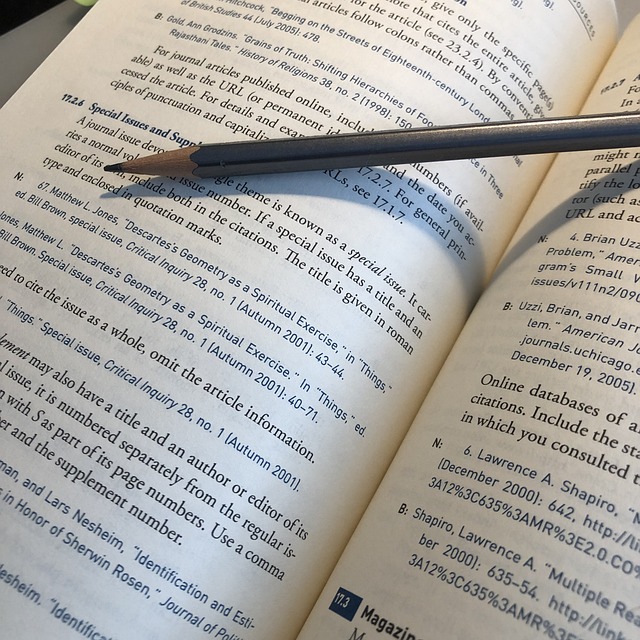
Why In‑Text Citations Matter
In APA format, in‑text citations give credit to the original source and help readers locate the full reference in the reference list. Proper citations also prevent plagiarism and enhance the credibility of your work.
Basic Author‑Date Format
The core of an APA in‑text citation is the author’s last name and the year of publication, enclosed in parentheses. For example:
(Smith, 2020)
If you mention the author in the sentence, only the year appears in parentheses:
Smith (2020) argues that…
Direct Quotations
When quoting directly, add a page number (or paragraph number for non‑paginated sources) after the year:
(Smith, 2020, p. 45)
Or in a narrative style:
Smith (2020) notes that “...” (p. 45).
Multiple Authors
For works with two authors, list both names every time:
(Brown & Lee, 2019)
For three or more authors, use the first author’s name followed by et al. after the first citation:
(Johnson et al., 2018)
In the first citation, you may list up to five authors before switching to et al. in later citations.
Multiple Sources in One Citation
Separate each source with a semicolon and arrange them alphabetically:
(Adams, 2017; Miller, 2021; Thompson, 2020)
Citing Secondary Sources
If you must cite a source you found within another source, include both authors, but name only the original source in the reference list:
(Taylor, 2015, as cited in Green, 2022)
Use this sparingly; always try to locate the original work.
Special Cases: No Author
When a work has no author, use the title (shortened if long) in place of the author name:
(“Global Climate Trends,” 2023)
Final Tips for SEO‑Friendly Academic Writing
• Keep the citation style consistent throughout the paper.
• Use bold for key terms and italics for examples to improve readability.
• Include the keyword “Citation” at the beginning of the article to signal relevance to search engines.
By mastering these APA in‑text citation rules, you’ll produce clear, credible, and properly attributed academic work.
**
About Isabella Russo
Practical knowledge enthusiast sharing everyday life hacks
Isabella Russo has been contributing to eKnaw for over a year, focusing on practical solutions and life improvements through simple, actionable advice.

Join the Discussion
Comments (0)